
What is taking so Long?
WHAT IS TAKING SO LONG? A MESSAGE TO THE FRUSTRATED BENEFICIARY
If you are a beneficiary waiting on an inheritance, it can feel like probate is moving at a glacial pace while the calendar turns faster. Meanwhile, you may be hearing very little from the executor, administrator, or attorney handling the estate.
From your perspective, it may seem simple: “Why can’t they just sell the property, pay the bills, and distribute the money?”
The reality is that probate administration is often far more complicated than beneficiaries realize. Delays do happen. Some are legitimate. Some are avoidable. Understanding the difference can help you evaluate whether the estate is progressing normally or whether something requires closer attention.
Probate Is Legal Process, Not Just Paperwork
Probate is not simply a family organizing assets after someone passes away. It is a court-supervised legal process designed to:
Identify heirs and beneficiaries
Gather estate assets
Pay debts and taxes
Resolve disputes
Transfer property legally
Protect creditors and vulnerable parties
Even relatively straightforward estates involve statutory waiting periods, required notices, financial investigations, and court procedures. In Texas, the independent administration process is often more efficient than probate systems in other states. Even so, administration can still take substantial time depending on the circumstances.
Common ISSUES
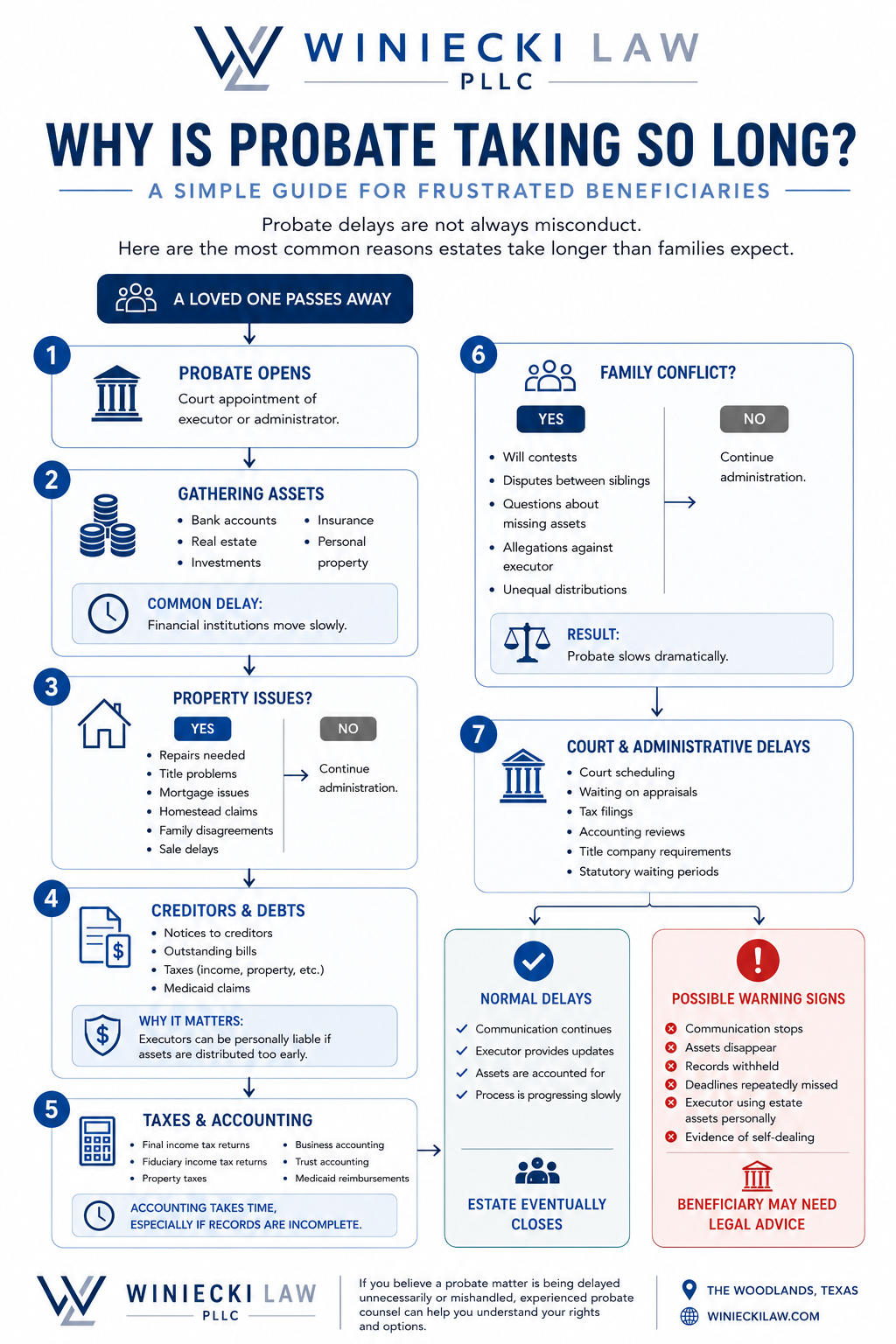
Real Estate Problems
Real estate is one of the largest sources of probate delay. The estate may need to clear title issues, obtain appraisals, coordinate repairs, address homestead claims, resolve mortgage problems, sell property in a difficult market, and the list goes on and on. If multiple beneficiaries disagree about whether to sell property, the process can slow dramatically.
Financial Institutions Move Slowly
Banks, investment companies, and insurance carriers rarely move quickly after a death. It can take months for an executor to collect account information sufficient to satisfy the inventory. Many beneficiaries assume the executor already has access to all assets immediately after appointment. That is often incorrect.
Creditors Must Be Addressed
Texas law requires certain notices to creditors. Some claims must be formally handled before distributions occur. An executor who distributes assets too early may expose themselves to personal liability if estate debts remain unpaid. As a result, cautious executors may delay distributions until they are confident the estate is financially stable.
Taxes and Accounting
Even estates without federal estate tax issues may have other tax issues that must be addressed.
Accounting take substantial amounts of time, especially if records are incomplete or disorganized.
Family Conflict
One disagreement can derail an otherwise simple probate. Common disputes include: Allegations of undue influence; Questions about capacity; Accusations against the executor; Disputes over property possession; Unequal distributions; or Missing assets. Litigation can extend probate significantly.
Sometimes the Delay Is a Warning
Not every delay is harmless. Beneficiaries should pay attention when:
Communication completely stops
The executor refuses to provide information
Assets appear to be disappearing
Deadlines are repeatedly missed
The executor is using estate property personally
Financial records are withheld
There is evidence of self-dealing
Beneficiaries do have rights under Texas law. Depending on the administration type and circumstances, they may be entitled to:
Accountings
Inventory information
Court filings
Distribution updates
Explanations regarding delays
In serious situations, beneficiaries may seek court intervention.
What Beneficiaries Can Do?
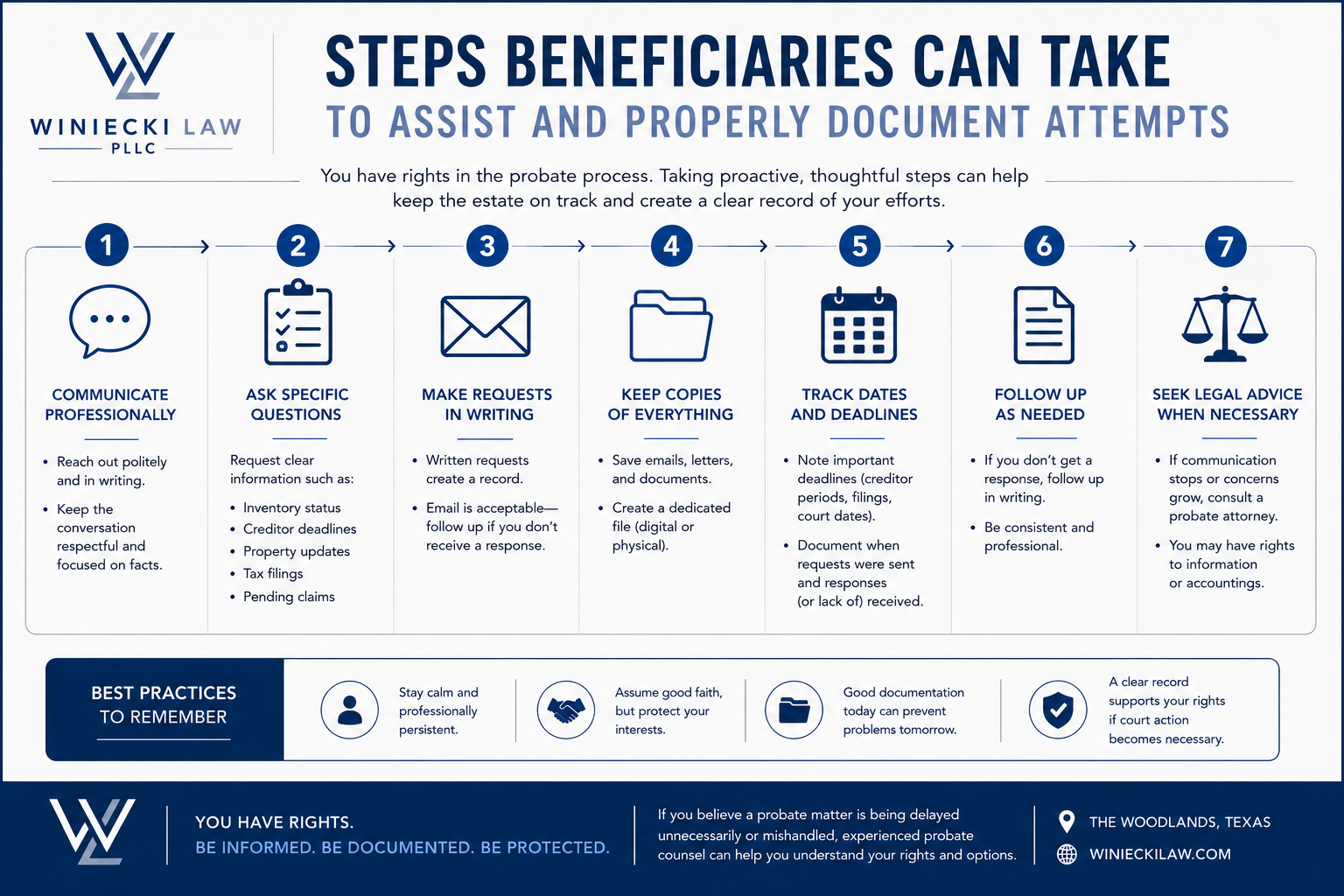
Ask Focused Questions
General frustration rarely moves probate forward.
Specific questions are more effective:
Has the inventory been filed?
Are creditor periods still open?
Has the house been listed?
Are tax returns pending?
Are there unresolved claims?
Clear questions often produce clearer answers.
the Difference Between Delay and Misconduct
A slow probate does not automatically mean someone is stealing from the estate. Executors are often balancing:
Legal duties
Family pressure
Financial issues
Court requirements
Personal grief
That said, transparency matters. Beneficiaries should not be ignored indefinitely.
Consult Probate Counsel When Necessary
If concerns escalate, a consultation with a probate litigation attorney can help determine:
Whether delays are normal
What information you are entitled to receive
Whether deadlines have been violated
Whether court action is appropriate
Sometimes a single demand letter or request for accounting resolves the issue quickly.
The Reality
Many probate delays are caused by people trying to avoid making mistakes. Executors face real legal exposure. Distributing assets too early, mishandling creditor claims, failing to maintain records, or favoring one beneficiary over another can create personal liability. As a result, careful executors often move slower than beneficiaries would prefer. The challenge is finding the balance between necessary caution and unreasonable delay.
Final Thoughts
Probate can feel painfully slow when you are waiting for answers, property, or inheritance funds. In some estates, delays are unavoidable. In others, they may indicate deeper administration problems.
Understanding the probate process helps beneficiaries separate ordinary delays from legitimate red flags.
If you believe an estate is stalled unnecessarily, being mishandled, or improperly administered, experienced probate counsel can help you evaluate your options and protect your interests.
